Choosing where to go in Colombia matters nearly as much as deciding to visit in the first place. A trip to Medellín feels very different from exploring the Amazon, relaxing on a Caribbean island, or driving through La Guajira in a 4x4.
Getting from place to place in Colombia can be challenging. The country is large and mountainous, so adding another stop could mean booking another flight or spending hours on the road.
Instead of trying to see as many famous places as possible, think about which parts of Colombia will give you the experience you’re looking for. The places listed here are a few of Colombia’s more popular stops to help you get oriented before you start narrowing things down.
Medellín
Medellín is a great place to start your first trip. There are lots of restaurants, nightlife spots, good public transport, and interesting neighbourhoods, so staying here for a few days is worth it. The Metrocable is more than just a tourist attraction; it gives you a real sense of how the city spreads through the Aburrá Valley.
Another advantage is Medellín’s location in Antioquia. Guatapé and El Peñol are easy to visit for a day, and you can also get to towns like Jardín if you want to see more of the mountains. Choosing where to stay in Medellín is important since the city runs along a narrow valley. If you stay close to a Metro station, you can save a lot of time when traveling around.
Think twice if: You are hoping for a city filled with historic monuments and colonial buildings. Medellín is more about its modern atmosphere, great food, nightlife, and recent history.
- Essential Medellin Travel Guide (Best Things to Do) [Half Half Travel]
- Medellín Travel Guide [Colombia Uncharted]
Cartagena
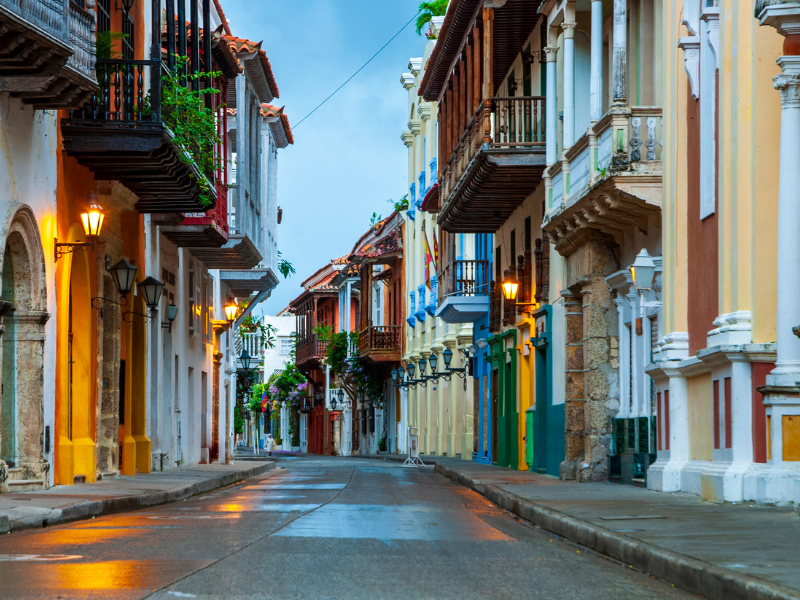
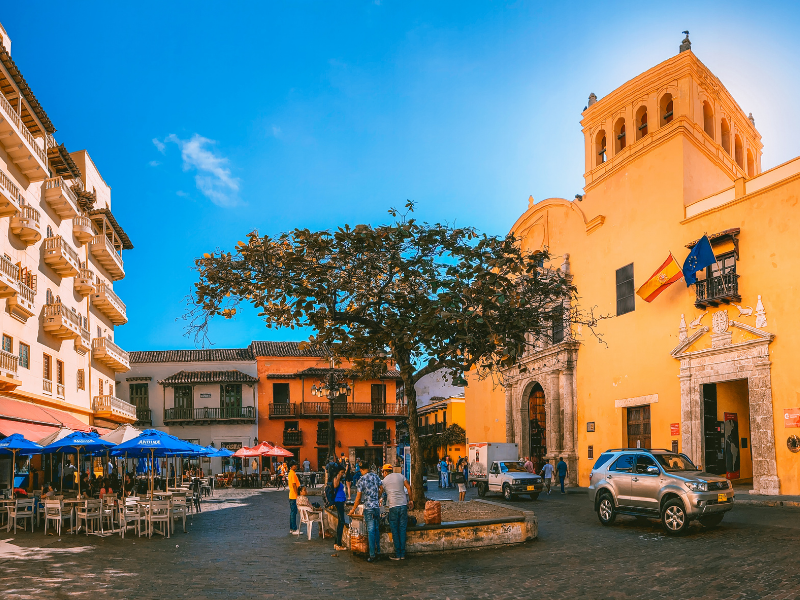
Cartagena shows a different side of Colombia than the inland cities. Its walled historic centre, the Getsemaní neighbourhood, and vibrant Afro-Caribbean culture make it the top historic city to visit. The Rosario Islands are close by, so you can enjoy the Caribbean Sea without taking another flight.
You do not need a complicated plan to enjoy Cartagena. The main areas are easy to walk around, and most restaurants and hotels are near the historic centre. Cartagena is not the best spot for city beaches in Colombia. The city is the main attraction, but if you want great beaches and swimming, you can take boat trips directly to the nearby islands.
Think twice if: You do not like busy tourist spots. Cartagena’s historic centre has lots of cruise ships, tour groups, and vendors.
- The Complete Travel Guide to Cartagena: Is It Safe, What To Do, & Where To Eat [Amber All Over]
- Cartagena Colombia Travel Guide [Blonde Atlas]
- Las Islas Rosarios: Hidden Reefs, Escobar Myths & How Long to Stay [Indie Traveller]
Bogotá
Bogotá is a good pick if you enjoy big capital cities. La Candelaria, the Gold Museum, Monserrate, and a lively restaurant scene give it much more cultural depth than just being a place to land at the airport.
Bogotá is also the best place to learn about Colombia’s history. It is a top pick for museum and culture lovers, but less important if you are more interested in beaches, hiking, or smaller towns.
Think twice if: You do not like big, spread-out cities where getting around can take a lot of time. Bogotá is huge, sits about 2,600 meters up in the Andes, and is not as easy to get around as Medellín.
- A Complete Guide to Bogota, Colombia [Laidback Trip]
- Backpacking Bogota Travel Guide [The Broke Backpacker]
Salento + the Coffee Region
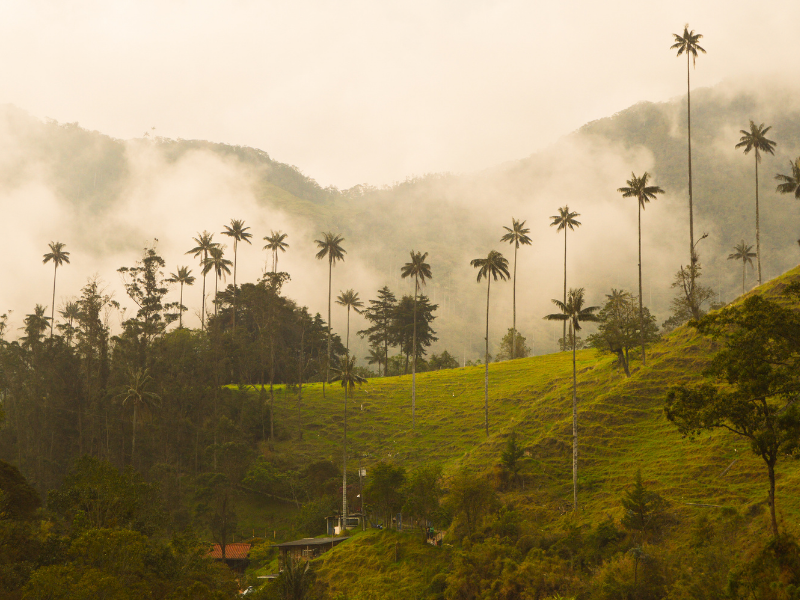
Salento is the best starting point in Colombia’s Coffee Region because it is close to coffee farms and the Cocora Valley. The wider Eje Cafetero covers Quindío, Risaralda, and Caldas, with towns like Filandia and hot springs near Santa Rosa de Cabal giving you more reasons to stay longer than just a quick stop in Salento.
Cocora Valley belongs in this section because it is one of Colombia’s most famous landscapes, but it is best visited as a day trip from Salento, not as its own base. Shared Willys jeeps run between Salento and the valley, and you can also visit coffee farms in the same area. If you have more than two or three days, plan for the whole Coffee Region, not just Salento. Visiting Filandia and other towns lets you see more without having to travel to a totally different part of Colombia.
Think twice if: You imagine Salento as a hidden coffee town. It is now one of the main tourist spots in the Coffee Region, and its popularity is part of the experience, especially in the centre and around the Cocora Valley.
- A Guide to the Best Things to do in Salento, Colombia [Oops.. I Booked Again]
- Salento Itinerary: 3 Perfect Days in Salento, Colombia [Eat Sleep Breathe Travel]
Tayrona + the Caribbean foothills
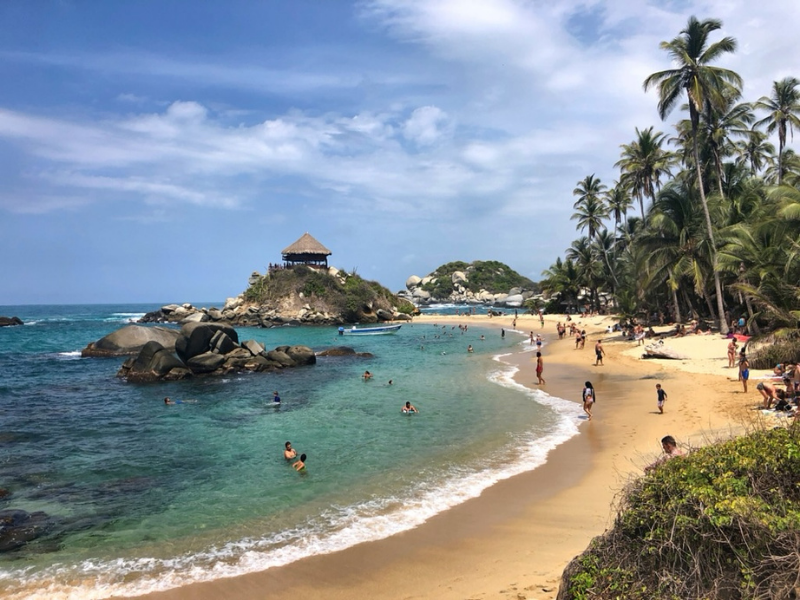
Tayrona offers a very different coastal experience than Cartagena. Here, you walk through tropical forest to reach beaches, stay near or inside the park, and spend time in the unique ecosystem between the Caribbean and the Sierra Nevada de Santa Marta. The park protects both land and sea, and there is plenty of wildlife.
Santa Marta is the main transport hub, and nearby Minca has mountain forests, waterfalls, and birdlife. These places are best seen as day trips within the broader region, rather than places to stay. Tayrona sometimes closes to visitors for environmental and Indigenous cultural reasons. Be sure to check the park’s current opening dates before planning your trip.
Think twice if: Your idea of a beach holiday is stepping out of your hotel straight onto a swimming beach. Many of Tayrona’s main beaches require a long walk, park accommodation can be basic, and swimming is not allowed or safe in some areas because of strong currents.
- Tayrona National Park, Colombia | How To Plan Your Visit [Along Dusty Roads]
- Complete Guide to Tayrona National Park, Colombia [Curious Travel Bug]
San Gil + Barichara
Adventure sports are the main reason to visit San Gil. Rafting, canyoning, rappelling, caving, and paragliding are all popular here, and the nearby Chicamocha Canyon offers scenery you will not find at other Andean stops.
Barichara adds even more to the experience. It is a slower-paced colonial town with artisan culture and the Camino Real walk to Guane. You can spend a few days here mixing outdoor adventures with relaxing downtime. Barichara is about 30 minutes from San Gil, so you can easily combine the two without moving hotels. San Gil works better as the practical base, while Barichara is the better place to slow down for a day.
Think twice if: You plan to travel around Colombia mostly by quick domestic flights. San Gil does not have a nearby airport, and even from Bucaramanga, it takes about three hours by road to get there.
- What to Do in San Gil, Colombia: A Complete Guide [Travelers & Dreamers]
- 7 Fantastic Things To Do In Barichara, Colombia | A Detailed Guide [Sandal Tan Man]
San Andrés + Providencia
Choose this area if the beach and sea are your main focus. San Andrés is far offshore, closer to Nicaragua than mainland Colombia, and its coral reefs are great for snorkeling, diving, kitesurfing, and boat trips around the islands.
Providencia is quieter and more natural. Its reefs, smaller size, and less development make it appealing if you want a more remote island experience. San Andrés, on the other hand, has more hotels, restaurants, and tourist infrastructure. To reach Providencia, you'll need another flight or a three-hour catamaran ride from San Andrés. If you want the quieter island, plan enough time to make the extra travel worthwhile.
Think twice if: You want a quiet, undeveloped Caribbean island. San Andrés is compact, but it is also busy and built up in places, with a much more developed tourism scene than its remote-island image suggests.
- Providencia, Colombia’s True Paradise Island [Vagabond Veronika]
- 13 Wonderful Things To Do in San Andres, Colombia [Along Dusty Roads]
Colombian Amazon
The Amazon shows why Colombia is more than just its cities. Leticia is the entry point, reached by plane, but the main draw is the river and rainforest: wildlife tours, nature reserves, Indigenous communities, and river trips to places like Puerto Nariño.
Puerto Nariño is a good choice if you want to spend more time in the Amazon itself instead of staying in Leticia every night. It is a small, car-free community you reach by river, and it is a great base for wildlife trips, including visits to Lago Tarapoto.
Think twice if: You want to explore on your own with lots of restaurants, nightlife, and places to wander. Most of the experience here is about boat trips, wildlife tours, and guided activities.
- 15 best things to do in Leticia, Colombia: The Ultimate Amazon Guide [Travelling the Wild Side]
- Leticia, Colombia Travel Guide: Things to Do, Borders & Amazon Tips [Nomads Beyond]
Pacific Coast
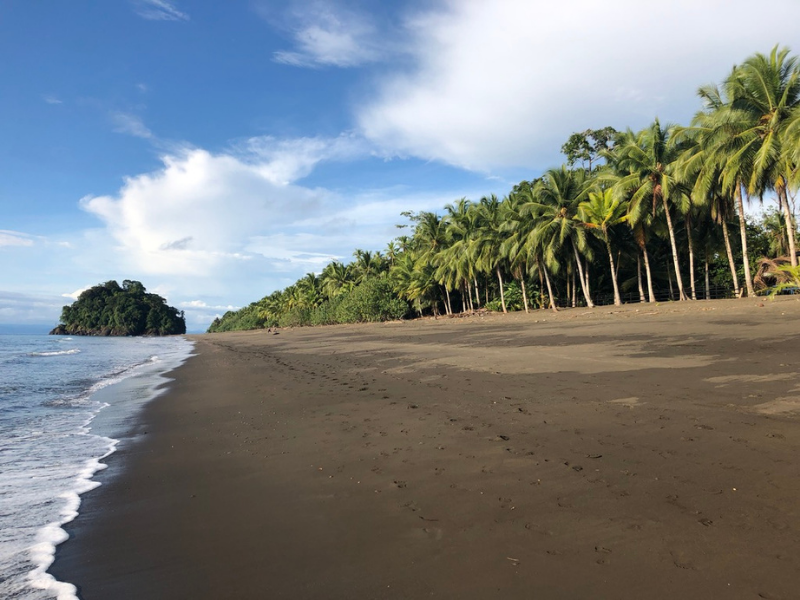
Colombia’s Pacific coast is much wilder than the Caribbean side. Nuquí, Bahía Solano, and El Valle are set between the thick Chocó rainforest and the ocean, with black-sand beaches, waterfalls, hot springs, and hardly any traditional resorts.
Whale season is a main reason people travel here. Humpback whales come to Colombia’s Pacific waters every year, and the official tourism season in Nuquí is usually from July to November.
Think twice if: You are worried about basic infrastructure. There are no roads to Nuquí from the rest of Colombia. You have to arrive by small plane or boat, and travel often continues by boat. Simple ecolodges are the norm instead of regular hotels.
- Visit Nuqui travel guide: best things to do on the Pacific coast of Choco [My Trip To Colombia]
- El Valle, Chocó: where Colombian jungle meets Pacific Ocean [Cuppa to Copa]
More ideas for Colombia
- My 20 Favorite Places to Visit in Colombia [Nomadic Matt]
- 10 Very Best Places In Colombia To Visit [Hand Luggage Only]
- Best Cities in Colombia: Your Essential Travel Bucket List [Travel Nerds]
- Offbeat Places To Add To Your Colombia Itinerary [The World On My Necklace]
- Discover Colombia’s Top 20 Must-visit Destinations [Travel + Leisure]
When you're ready to start planning, take a look at our research and planners to get you there.
 Feral Travel